
Plan Ahead: The Importance of Early College Preparation
- info8148474
- Sep 17
- 4 min read
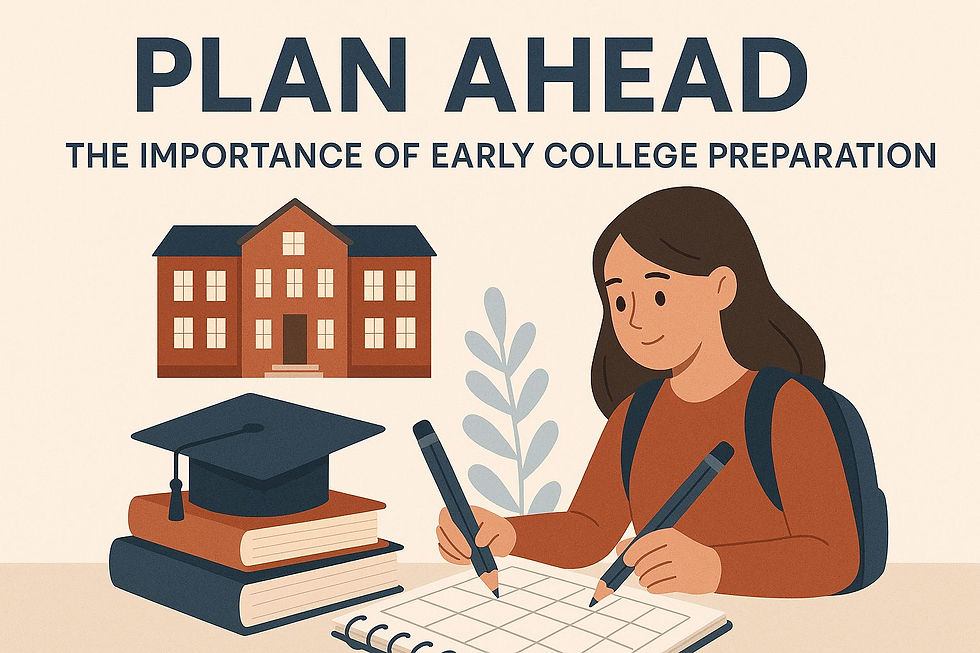
Admissions into colleges is increasingly becoming complex and heavily competitive. The acceptances now range less than 5% percent for many top universities. Even public elite universities like UCLA admit under 20 percent of their applicants. With these odds, more and more students and families are leaning toward early college planning.
Early planning matters because students then tend to be better academically prepared, engage in worthwhile activities, and approach admissions more easily. In the U.S. context, early planning refers to structured preparation that begins as early as middle school or the freshman year of high school. This blog outlines the benefits of planning early for college and provides a clear, step-by-step roadmap to get started.
What is Early College Planning?
Early college planning goes deeper than just thinking about the future. It is a detailed approach that brings together academics, extracurricular preparation, financial planning, and personal growth into one plan. There is a big difference between casual preparation and purposeful planning. Casual preparation might mean taking a test prep class or joining a club in junior year. Purposeful planning, on the other hand, means setting goals as early as freshman year, tracking progress, and making decisions that lead toward long-term outcomes.
Why Start Early?
The question of when to start is often debated. Still, most experts agree that the best results come from beginning in middle school or early high school. Starting early gives students plenty of time to explore, evolve, and polish their interests while keeping the workload manageable by senior year.
Key Benefits of Early College Planning
Planning ahead provides numerous concrete benefits for a student’s college journey.
Stronger Academic Profile
Taking rigorous courses, such as AP, IB, or honors courses, shows a serious commitment to academics. It also allows time to build solid foundation in subjects that interest the student, participate in competitions, courses and explore the subjects beyond school curriculum. Thus having a robust academic profile for four years instils that evidence of consistency and resilience to a college admission office.
Better Extracurricular Development
Depth takes priority over breadth when viewed by the colleges. Those who have an early start in any activity have the advantage of levying a long-term involvement into those activities that they actually care about. This could mean being a team captain, founding a nonprofit initiative, or excelling at the arts. These activities have been correlated with the cases where students with higher GPAs and consistent extracurricular engagement went on to earn more private scholarships than peers with a ragtag or last-minute extracurricular record. By planning long-term, it is ensured that activities will focus on passion and leadership and not just filling resumes at the eleventh hour of senior year.
Reduced Stress and Better Time Management
The admission process can put a great deal of pressure on most families. A survey done in 2023 by Princeton Review showed that almost 75% of students rated their stress level as very high during application season. First of all, giving oneself an early start makes it possible for students to spread their work around for testing, essay writing, and college research during the course of a couple of years. This not only keeps anxiety at bay; it also instils within the students scrumptious management skills that will serve them well in college and beyond.
Higher College Acceptance Rates
The other advantage is higher acceptance rates. Some colleges accept higher percentages of students under early decision or early action programs. Early planning means students can act on these opportunities as their applications are complete and polished by fall senior year.
How to Begin Early (Step-By-Step)
Middle School (Grades 6–8)
Foster curiosity and study habits.
Encourage reading, the joining of clubs, and participation in summer enrichment programs.
Explore interests casually to set the stage for more intense extracurriculars in the future.
Freshman Year (Grade 9)
Choose a balanced course load with at least one challenging class.
Remember that each of your engagements and activities should address these key aspects: your level of interest, the depth of your involvement, the duration of your engagement, and the measurable impact you achieve.
Start documenting academic and non-academic extracurricular activities and impact projects.
Cultivate a respectful and genuine relationship with your teachers.
Engaging sincerely with them not only enhances your learning experience but also creates a foundation of trust and support. This connection can inspire their encouragement and willingness to assist you with recommendations for your summer plans and college journey.
Plan to participate in outcome-driven summer activities such as skill development workshops, academic programs.
Sophomore Year (Grade 10)
Begin your test prep journey for various standardized tests and competitions.
Shadow, volunteer, or attend competitive summer programs in areas of career interest.
Engage fully in a select number of impact activities.
Plan to participate in outcome-driven summer activities such as internships in your field of interest, community service projects that make a tangible impact, academically intense programs, research programs, or entrepreneurial ventures.
Junior Year (Grade 11)
Appear for standardized exams such as the SAT or ACT.
Visit college campuses or attend virtual tours as the college list starts to narrow.
Take leadership roles within the clubs, sports, or service organizations.
Aim to create a significant spike in your performance across both academic and non-academic activities, including impactful projects.
Focus on outcomes that showcase your dedication, skills, and leadership, making a lasting impression and elevating your overall profile.
Start working on drafts of personal statements or essays over the summer.
Plan to participate in outcome-driven summer activities such as internships in your field of interest, community service projects that make a tangible impact, skill development workshops, research programs, or entrepreneurial ventures.
Senior Year (Grade 12)
College applications and essays are to be completed.
Recommendation letters should be requested during the early fall.
Scholarship applications
Continue engagement across your initiatives.
Common Mistakes to Avoid
Starting too late: When application starts during junior year, the timeline is squeezed and less productive opportunities abound.
Overdoing activities without depth: Colleges like sincere involvement more than an arbitrary collection of disparate engagements.
Not individualizing the plan: Every student has their own set of strengths and interests. Thus, rarely does a plan designed for all succeed.
Noopur Kanchan


Comments